Currently Empty: R0.00

LiFePO₄ vs Lead-Acid Batteries: Which Is Better for Solar?
LiFePO4 batteries have become the preferred energy storage solution for many modern solar systems. However, many buyers still compare LiFePO4 batteries vs lead-acid batteries before making a purchase. Although both technologies store electricity effectively, they differ in lifespan, charging speed, efficiency and maintenance. Understanding these differences will help you choose the right battery for your home or business.
What are LiFePO₄ batteries?
A LiFePO₄ battery is a lithium iron phosphate battery designed for long-lasting energy storage. It has become one of the most popular choices for modern solar installations because it offers excellent safety, high efficiency and a long service life.
Key advantages include the following:
- Long cycle life
- Fast charging
- Lightweight construction
- High energy efficiency
- Minimal maintenance
- Stable performance
What Is a Lead-Acid Battery?
Lead-acid batteries have powered backup systems for decades. They are generally less expensive to purchase initially, making them attractive for budget-conscious installations.
However, they require more maintenance and usually have a shorter operating life than lithium batteries.
Common types include:
- Flooded lead-acid batteries
- AGM (Absorbent Glass Mat)
- Gel batteries
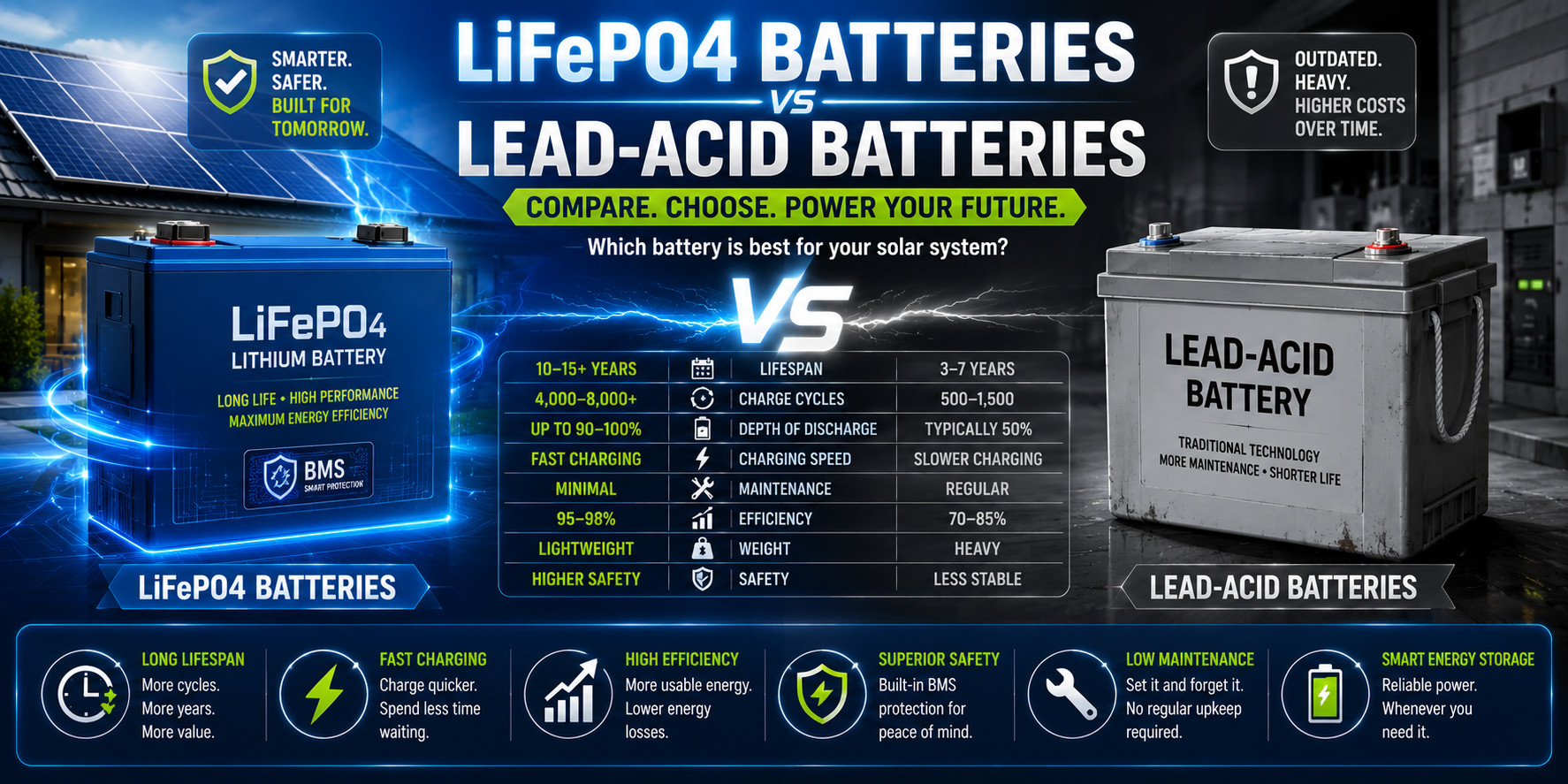
LiFePO₄ vs Lead-Acid Batteries: Key Differences
| Feature | LiFePO4 | Lead-Acid |
|---|---|---|
| Lifespan | 10–15+ years | 3–7 years |
| Charge Cycles | 4,000–8,000+ | 500–1,500 |
| Depth of Discharge | Up to 90–100% | Typically 50% |
| Charging Speed | Fast | Slower |
| Maintenance | Minimal | Regular (depending on type) |
| Weight | Lightweight | Heavy |
| Efficiency | 95–98% | 70–85% |
| Initial Cost | Higher | Lower |
Although LiFePO₄ batteries cost more upfront, they often provide better long-term value because they last significantly longer.
LiFePO₄ Batteries vs Lead-Acid Batteries: Efficiency Comparison
Efficiency plays an important role in solar energy storage.
LiFePO₄ batteries can return more of the stored electricity during discharge, reducing energy losses.
Lead-acid batteries lose more energy during charging and discharging, making them less efficient over time.
As a result, lithium batteries often help maximise the value of your solar investment.
LiFePO4 Batteries: Lifespan Compared with Lead-Acid
One of the biggest advantages of LiFePO₄ technology is its exceptional lifespan.
A quality lithium battery can often last more than 10 years with proper use, while many lead-acid batteries require replacement much sooner.
This longer service life can reduce replacement costs over the lifetime of your solar system.
Safety of LiFePO4 Batteries
Modern LiFePO₄ batteries include advanced Battery Management Systems (BMS) that monitor voltage, temperature, and charging conditions.
These safety features help protect the battery from:
- Overcharging
- Deep discharge
- Overheating
- Short circuits
Lead-acid batteries are reliable when maintained correctly, but some types require ventilation and periodic maintenance.
Are LiFePO₄ Batteries Better for Solar?
The best choice depends on your priorities.
Choose LiFePO4 batteries if you want:
- Long service life
- Higher efficiency
- Faster charging
- Low maintenance
- Better long-term value
Choose lead-acid batteries if you need:
- Lower initial purchase cost
- A simple backup solution
- A battery for occasional use
Frequently Asked Questions
Can I replace lead-acid batteries with LiFePO4 batteries?
Yes, in many systems. However, you should confirm compatibility with your inverter and charging equipment before upgrading.
Are LiFePO4 batteries safer?
Yes. Their chemical composition is more stable than many other lithium battery technologies, especially when combined with a quality BMS.
Which battery requires less maintenance?
LiFePO4 batteries require very little routine maintenance compared with many lead-acid battery types.
Which battery provides better long-term value?
Although the initial investment is higher, LiFePO4 batteries often offer a lower lifetime cost because of their long lifespan and high efficiency.
Conclusion
Comparing LiFePO₄ vs lead-acid batteries shows why lithium technology has become the preferred choice for many modern solar systems. Higher efficiency, a longer lifespan, and lower maintenance requirements make LiFePO₄ batteries an excellent investment for homeowners and businesses seeking dependable energy storage.
If your goal is reliable long-term performance, a quality LiFePO4 battery paired with a compatible inverter can deliver excellent value for many years.